Tool for Integrated Programming (TIP)
Tool for Integrated Programming (TIP)
Giving direction to efforts for a sustainable energy system requires effective communication between governments, grid operators, and energy-intensive industries. The Tool for Integrated Programming (TIP) makes it possible to design energy systems iteratively, focusing on the interactions between energy carriers, industries, scales, and impact on infrastructure.
Regional energy system
The TIP is intended for policy officers, energy planners, ambassadors and energy advisors, among others. The tool supports the integrated programming of the regional energy system. As a design tool, it helps local authorities gain insight into the impact of policy plans on the regional energy system for the longer term (2040 & 2050). The TIP focuses on policy areas (‘developments’) in which a local or regional authority has room for manoeuvre and helps to explore the options available in these areas.
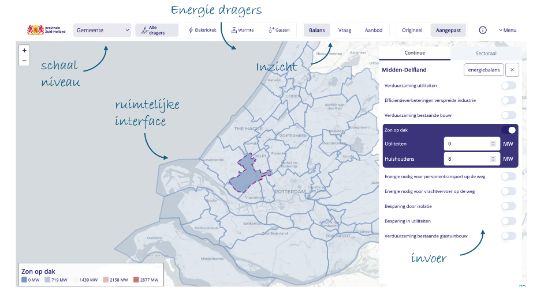
We are currently working towards a platform that features shared standards, which provinces, municipalities, grid operators, and other stakeholders will be able to use to upload and edit their visions on future energy systems. These parties can then prioritise the necessary grid investments and develop action-oriented policies for sustainably generating energy, organising energy-intensive industries, and increasing flexibility.
Further development with partners
The first version of TIP is now live and is being further developed for specific users. Recent user research – coordinated by SP IPE – revealed that tooling like TIP meets various user demands, and can make an important contribution to processes and products in the integrated area-based programming of energy systems. One of SP IPE’s recommendations is to centrally coordinate TIP’s further development and embedding.
The TIP was developed by a consortium including Witteveen+Bos, Quintel and Antea Group, with Stedin and TNO providing strategic input and valuable feedback being gathered thanks to a focus group with representatives from provinces, municipalities and grid operators.
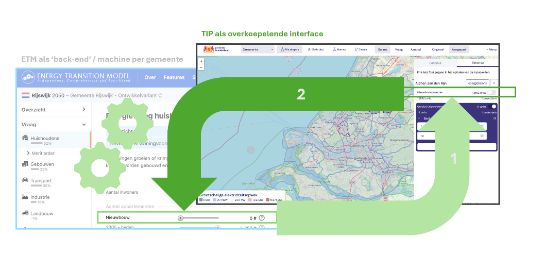
Integrated design with TIP
To realise the energy transition in coordination with other spatial and social challenges and achieve climate targets, it is necessary to program regional energy systems in a shared and integrated way. Municipalities, provinces, RES regions, and grid operators are tasked with this responsibility. Their challenges include making heating more sustainable, developing sustainable mobility, and integrating sustainable electricity generation.
In an integrated programming approach, choices related to energy systems are explored, developed, and then recorded in various products. These products include an energy vision, a pMIEK, and an implementation programme. Provinces, grid operators, municipalities, RES regions, and other stakeholders follow the process together. Existing data, models and methods did not offer sufficient opportunities for integrated, spatial, multi-scale design – TIP does.
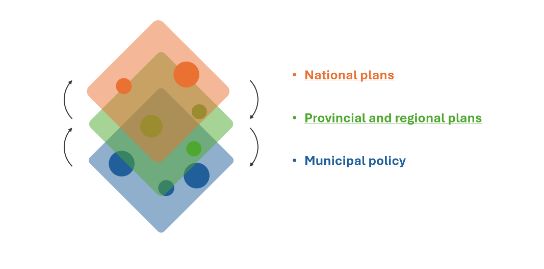
ETM scenarios at different scale levels
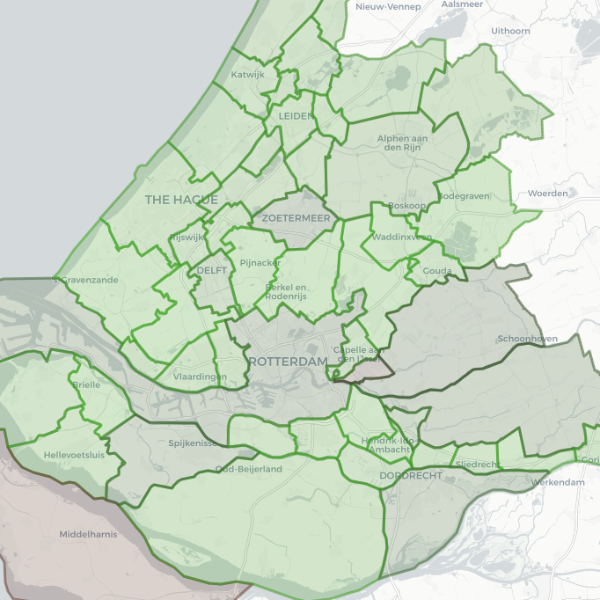
TIP is closely aligned to the Energy Transition Model (ETM), a mathematical model used to simulate the energy system of a municipality, province or country for a given year. TIP represents ETM scenarios visually on a map at different scales – municipality, province and/or RES region – next to or on top of one another, providing results in the form of energy balances and energy infrastructure impact.
This offers insight into the impact of energy systems and spatial choices at different scales. TIP enables users to explore how provincial and national plans affect municipalities and regions, as well as vice versa. It also shows how municipal and regional plans relate to those at provincial and national level.
Netbeheer Nederland scenarios as starting point
TIP incorporates scenarios from Netbeheer Nederland. The user decides which scenario to use as a starting point: customised scenarios from a province or municipality; the national scenario from grid operators, which is based on existing policy and grid operators’ investment plans (stable middle scenario); or Netbeheer Nederland’s scenarios, featuring, for example, a larger role for alternative energy carriers.
The user can then easily modify these scenarios. The modified scenarios are subsequently processed using the ETM, with results being entered and spatially visualised through a GIS-based dashboard. In the current version, the user can work with the policy areas below. These will later be expanded.
- newbuild plans and associated energy demand
- energy savings through insulation
- increasing the sustainability of existing buildings
- expansion/contraction of greenhouse horticulture
- increasing the sustainability of greenhouse horticulture
- roof-based solar energy
- ground-based solar energy
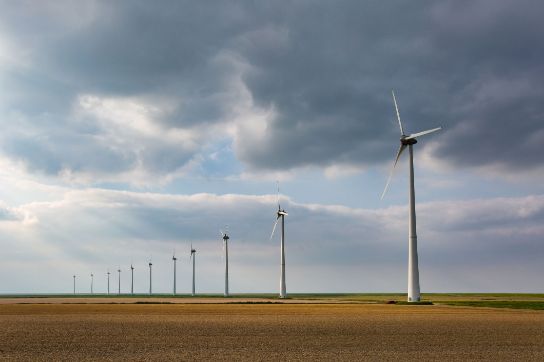
- land-based wind energy
Benefits of TIP

Integrated and spatial design
Iterative design with attention to the interactions between energy carriers, sectors, scale levels and impact on Infrastructure.

Insight into the impact of choices
Gain insight into the effects of choices on the regional energy system and the associated infrastructure. Including visualisation via a GIS-based map.

Develop a joint vision of the future
Representatives of the province, municipality and Arnhem-Nijmegen metropolitan area can jointly build a quantitative picture of the regional energy system in 2050.
More information?

.jpg)