Nature-inclusive designs for offshore wind farms
Nature-inclusive designs for offshore wind farms
The construction and operation of offshore wind farms have a negative impact on marine life in some cases. However, through adoption of a nature-inclusive approach, wind farms can also make a positive contribution to strengthening the ecosystem. Witteveen+Bos and Wageningen Marine Research were contracted by the Ministry of Agriculture, Nature and Food Quality to develop a catalogue of nature-inclusive designs, consisting of specific nature-inclusive design options to exploit these opportunities.
Insight into measures and costs
The Dutch government requires holders of permits for offshore wind farms to implement measures that benefit the habitats of indigenous marine fauna.
These organisations expressed a desire for insight into the range of options available for this and the associated costs. The catalogue that was created indicates which type of NID (Nature-Inclusive Design) is suitable for a given target species and a given location, the expected ecological benefits, and the technical requirements and costs.
Indigenous species under pressure
The catalogue was compiled using input from experts in the fields of ecology and marine biology, structural and offshore engineering, geotechnical engineering, hydrodynamics, risk management and cost estimation.
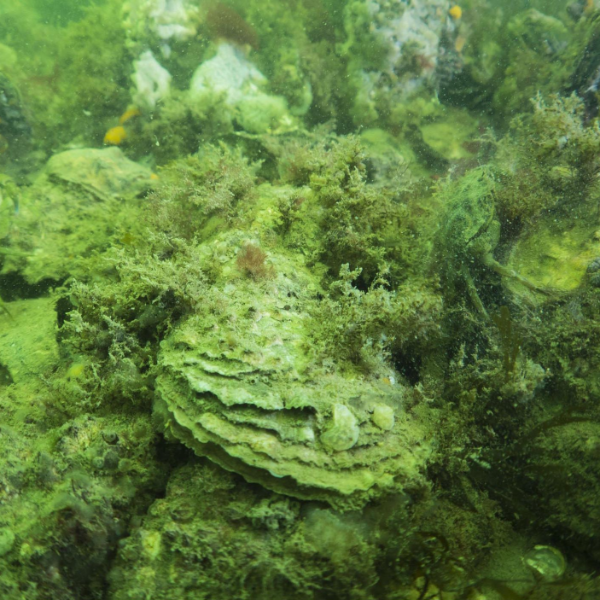
The publication, which was made available in 2020, focuses primarily on measures to protect indigenous species that are under pressure, such as cod and the flat oyster. Other (commercial) species can also benefit from the measures, such as the North Sea crab and the European lobster.


Best available techniques
Following on from this publication, we worked in 2024 on a Decision-making framework and catalogue for nature-inclusive construction in the North Sea, commissioned by Noordzeeoverleg and the former Ministry of Economic Affairs and Climate Policy. This framework was created in response to agreement 5.2 in the North Sea Agreement.
This stipulates that periodic agreements must be made within Noordzeeoverleg on the best available techniques for mitigation, nature-enhancing construction and ecologically friendly practices, as well as the associated outcomes for new installations and structures.
The report identifies the best available techniques, as well as an approach for integrated evaluation of current and near-future techniques for the purpose of decision-making.
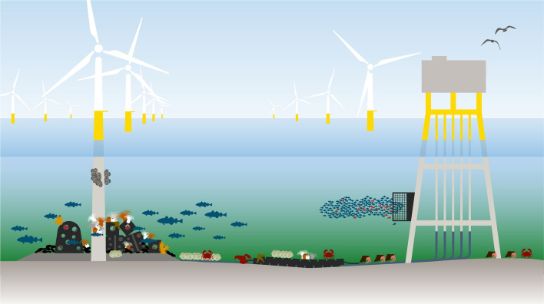
Experts at Witteveen+Bos argue that Nature-Inclusive Design (NID) is not necessarily more expensive and less time-efficient. For example, a narrower working corridor avoids unnecessary disturbance of the seabed. A narrower working corridor is also more efficient. In addition, offshore infrastructure can offer ecological benefits: the erosion protection at the base of a wind turbine can also serve as a shelter and nursery for fish.
More information?
