North Sea hydrogen infrastructure as foundation for energy transition
North Sea hydrogen infrastructure as foundation for energy transition
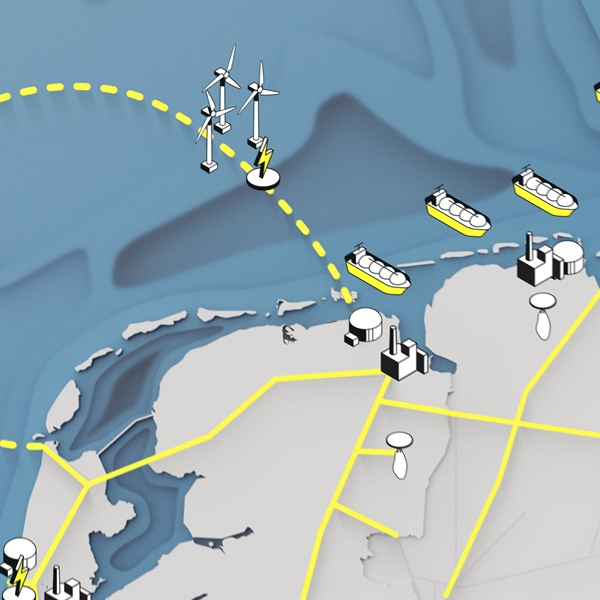
Gasunie is currently working on HyOne, an innovative network of offshore hydrogen infrastructure in the North Sea. Witteveen+Bos, in collaboration with Worley, is carrying out various studies to support the design activities, investigate feasibility and determine planning priorities.
The North Sea plays a key role in the energy transition. Offshore wind farms in this area will generate the majority of our country’s wind energy over the coming decades. However, this energy does need to be converted into electricity, which in turn presents challenges for our grid. One solution is to convert or store some of the electricity generated as hydrogen and then transport it to the shore.
HyOne
The HyOne infrastructure, which will be built and put into service during the coming decade, will handle this task. Various projects and programmes for developing and shaping HyOne are currently ongoing.
Within the overall scope of the HyOne project, we are involved in five sub-projects (see box): a routing and landfall study for offshore hydrogen pipelines, a Pre-FEED study for an offshore PEM platform, a nature-positive design for offshore infrastructure, a study into subsea connection concepts and a study focused on operation and maintenance.
Pioneering
The political and market ambitions relating to hydrogen extend beyond existing (European) legislation and technical (design) standards. So innovation in this area goes hand in hand with the development of new frameworks and working methods. This calls for an integrated approach, pioneering work and close collaboration with stakeholders.
Witteveen+Bos is actively working to build a strong ecosystem together with its partners. Only by sharing our knowledge and pooling our expertise can we jointly solve this complex puzzle.
The North Sea: a multifunctional habitat
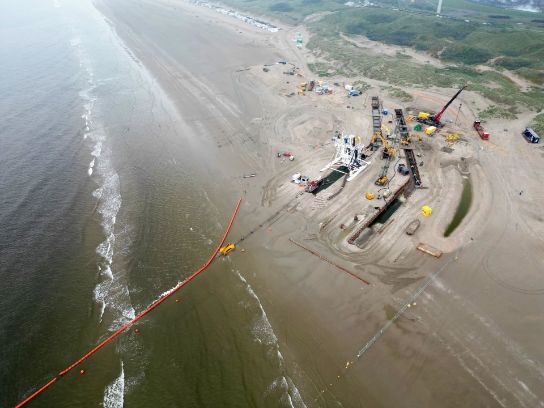
As well as a busy shipping route and an area of economic activity (fishing, energy), the North Sea is also a valuable nature reserve. Witteveen+Bos is working internationally with public authorities, network operators, contractors and energy companies in Denmark, Belgium and other countries to identify all the impacts on the natural ecosystem and evaluate them through Environmental Impact Assessments (EIAs). Our aim is to preserve all the natural functions of the North Sea and, where possible, to strengthen them by advising on mitigation and enhancement measures.
Three subprojects highlighted
Routing and landfall study for offshore hydrogen pipelines
One of HyOne's first steps is to identify the best routes through the North Sea and the Wadden Sea, and to identify and minimise any negative impacts on the environment and the surrounding area.
By extension, this also means that we are analysing the relevant legislation and regulations and identifying which permits will be needed. This study provides Gasunie with a solid basis for decision-making and further development.
Nature-enhancing design for offshore infrastructure
What design and construction choices can minimise the impact on the marine environment and, where possible, even have a positive impact? We are investigating opportunities for nature restoration and nature enhancement in the North Sea and the Wadden Sea, and evaluating both conventional and innovative near-shore installation methods.
Management and maintenance study
In respect of the future management and maintenance of the offshore infrastructure, we are identifying and investigating logistical challenges, and examining potential interactions with existing offshore activities and infrastructure.
This includes a review of both the technical and economic implications. We are also collecting industrial best practices in order to establish a robust framework for management and maintenance. Thanks to intensive collaboration with Gasunie, the study will deliver valuable insights for strategic decision-making.
More information?
